

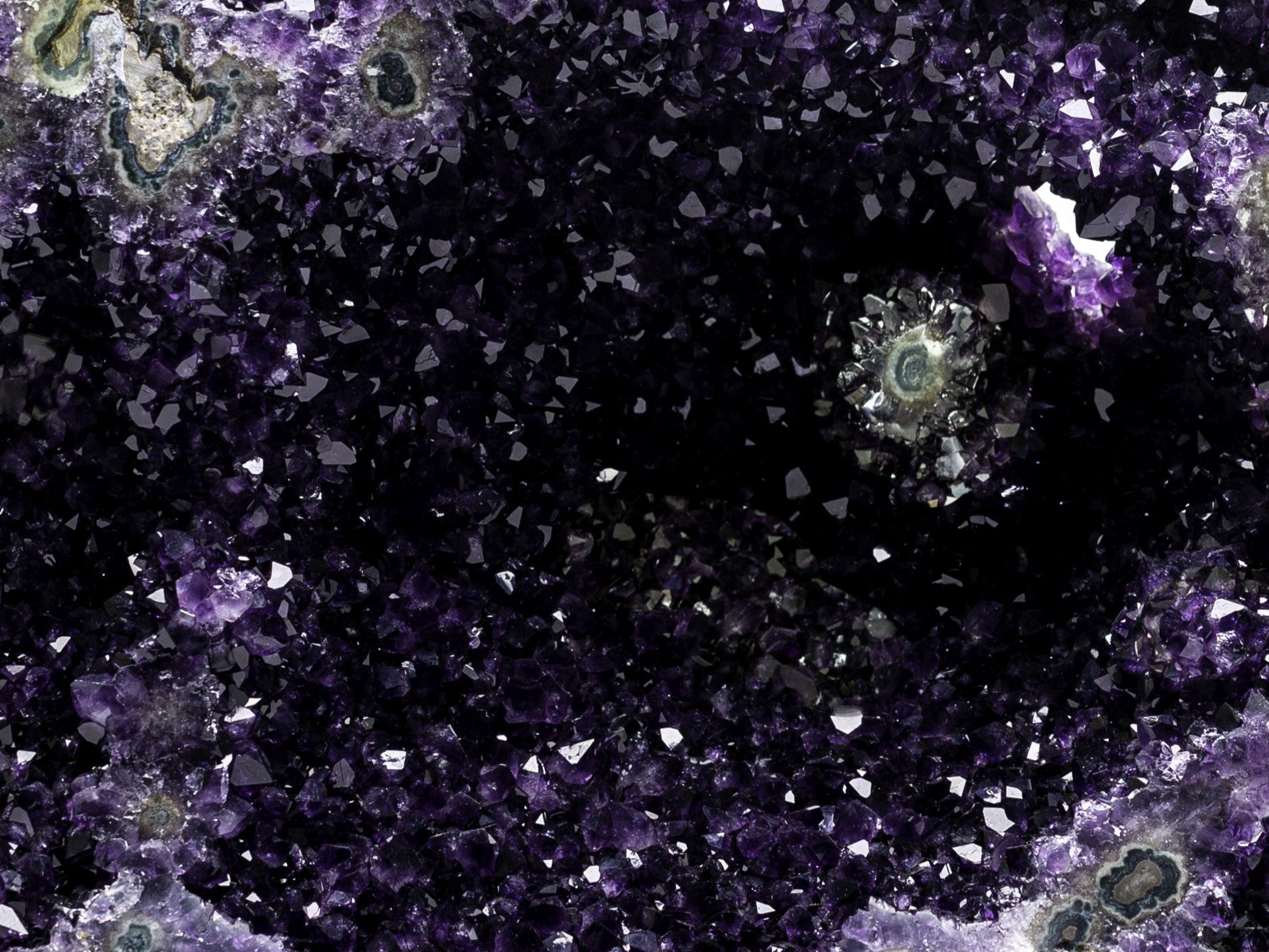
Looking for a piece that is beautiful, timeless, and built to last? Amethyst has been one of the most consistently valued gemstones in human history, prized not just for its color but for what that color has represented across centuries of design, royalty, and craft. Its deep violet reads differently in every room, and it works in ways that few natural objects do.
What Does Amethyst Mean?
Amethyst has carried cultural weight for over 4,000 years, and its significance has always been rooted in its color. The name comes from the Greek amethystos, meaning "not intoxicated." Ancient Greeks and Romans carved drinking vessels from amethyst, believing the stone's violet hue kept the mind clear and sober. That association with clarity and self-possession made it a stone of choice for rulers and scholars alike.
European royalty wore amethyst alongside sapphires and rubies in crowns, rings, and ecclesiastical treasures. The British Crown Jewels include amethyst. Catherine the Great of Russia was known for her collection of Siberian amethysts. The stone's deep purple, historically the most expensive color to produce in dye or pigment, made it a natural symbol of authority and refinement. It was not a casual stone. It was chosen deliberately, by people who understood what color communicates.
Today, that same color logic applies in interior design. Deep violet is rare in nature and rarer still in a material that holds its saturation permanently. Amethyst does not fade, chip, or go out of style. It is one of the few decorative objects that carries genuine historical context and still reads as current.
What Is Amethyst Used For?
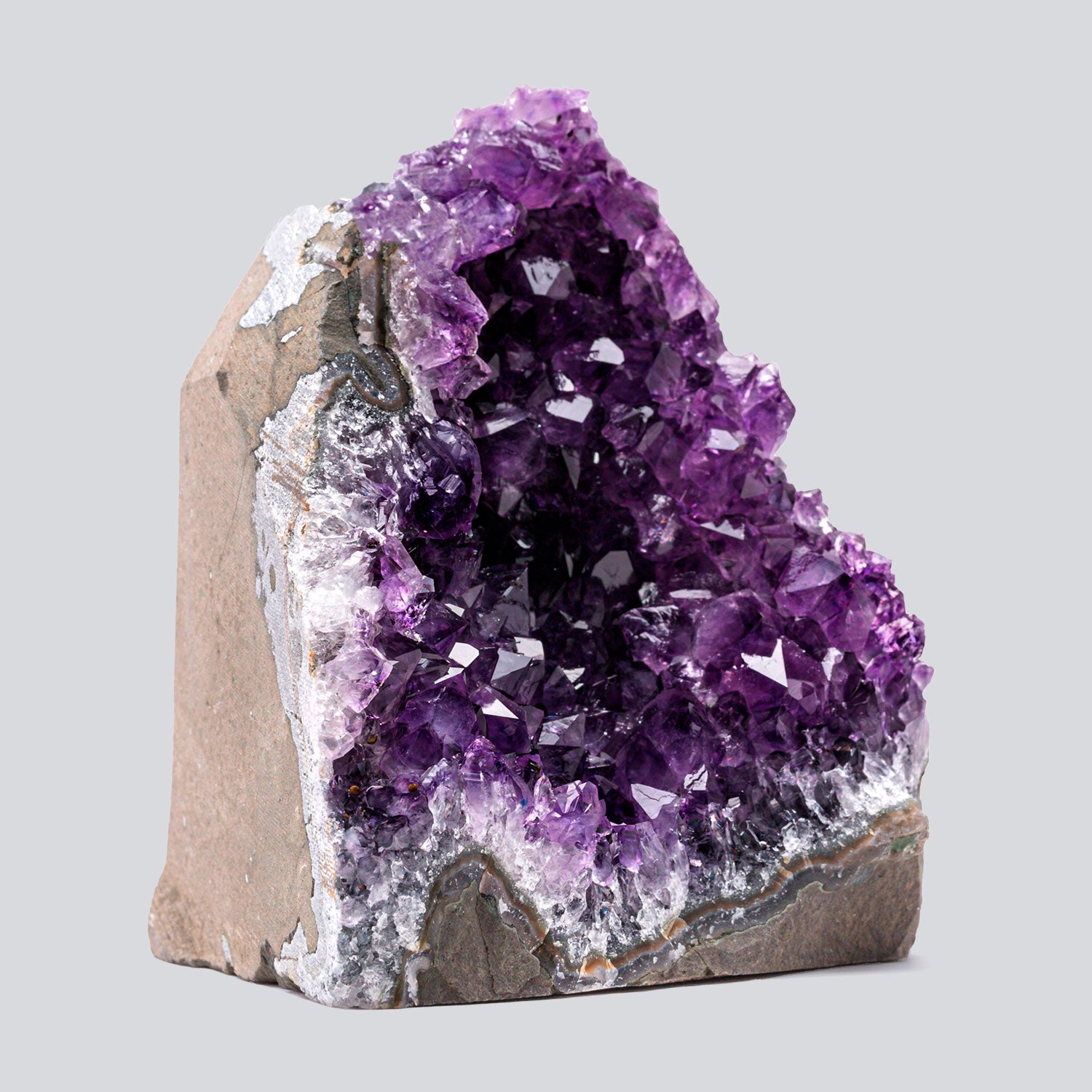
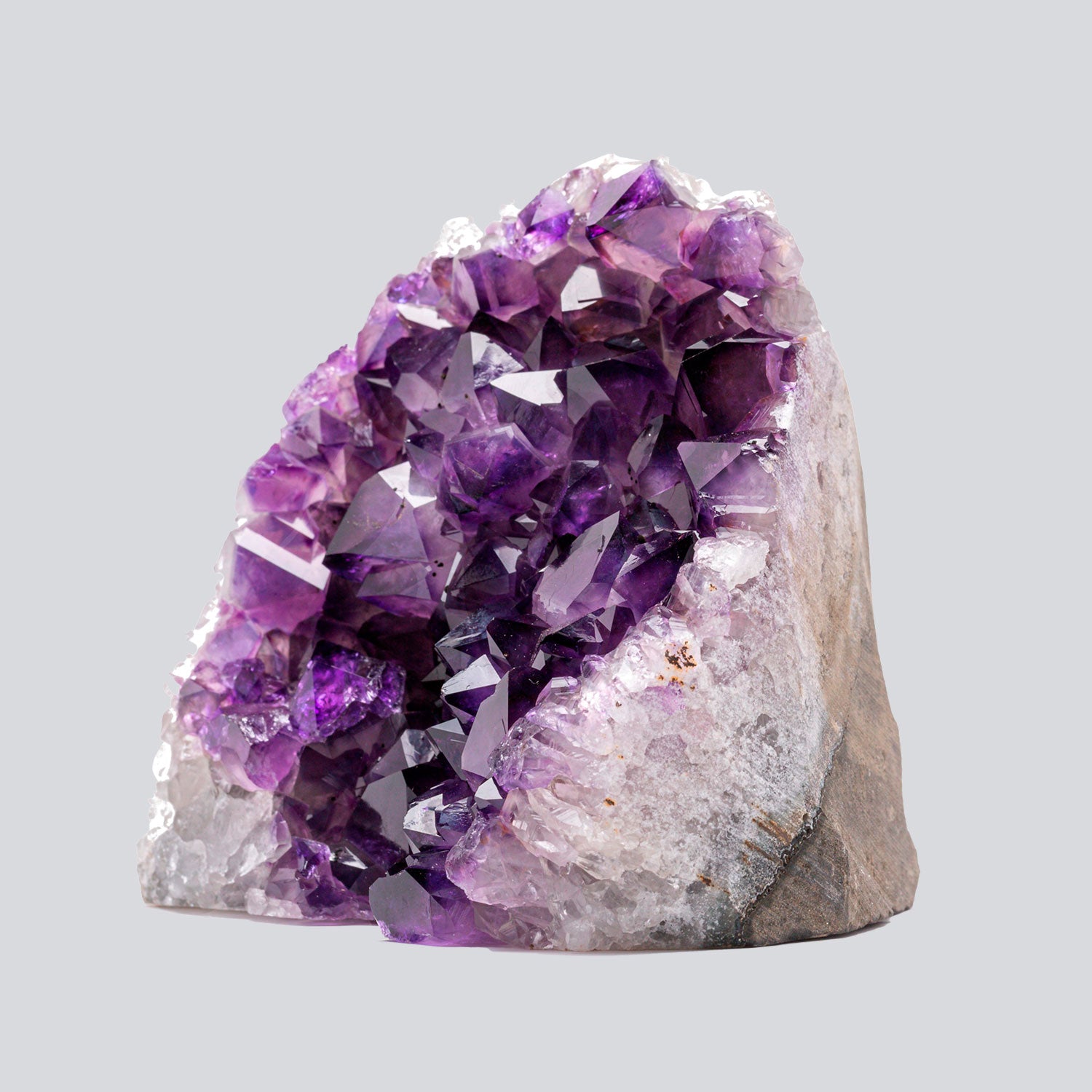
As a home decor piece, a natural amethyst geode is unlike anything mass-produced. It is a geological sculpture, shaped over millions of years, that brings organic texture, depth, and a quiet authority to any room. A cathedral geode in a living room corner or a cluster on a marble shelf becomes an instant focal point, the kind of piece guests ask about.
As a gift, amethyst is one of the most considered choices available. It is the February birthstone, a designation it has held since the standardization of the modern birthstone list in 1912, and the traditional stone for 6th wedding anniversaries. Unlike flowers or candles, it lasts indefinitely and only becomes more meaningful over time. A natural Uruguayan amethyst from Emporion is especially significant because each piece is one-of-a-kind, sourced directly from Artigas.
A Brief History
- Ancient Greeks and Romans carved amethyst into drinking vessels and signet rings, associating its violet color with clarity of mind.
- European royalty set amethyst alongside diamonds and sapphires in crowns, scepters, and church treasures across the medieval and Renaissance periods.
- In the 18th century, large amethyst deposits were discovered in Brazil and Uruguay, making the stone more accessible while Uruguayan specimens retained their premium status due to superior color depth.
- Amethyst is the February birthstone and the traditional 6th anniversary stone, two designations that have made it one of the most gifted gemstones in the world.
Amethyst in Interior Design: How the Color Works
Purple is one of the most psychologically complex colors in interior design. It sits at the intersection of warm red and cool blue, which means it reads differently depending on the light and the palette around it. Deep violet amethyst, particularly from Uruguay's Artigas region, leans toward blue-violet rather than red-violet. This gives it a cooler, more architectural quality that works well in rooms with warm neutrals, natural wood, and stone.
In a room with warm whites and linen, a deep violet amethyst cluster provides contrast without competing. In a room with cool grays and marble, it adds warmth and organic texture. Against aged brass or bronze hardware, the violet deepens and reads as genuinely luxurious. It is one of the few natural objects that works across both warm and cool palettes without adjustment.
Amethyst also has the unusual quality of changing appearance throughout the day. In morning light it reads as a cooler, more saturated violet. In afternoon light it warms slightly. Under artificial lighting it can appear almost plum. This variability makes it a more dynamic decorative object than most, one that rewards placement near a window or under directional accent lighting.
How to Use Amethyst in Your Home
A large amethyst geode works best as a floor or shelf piece, somewhere it can be seen from across the room. Its presence should feel inevitable rather than decorative. A cathedral geode in an entryway sets a tone for the entire home. A large cluster on a living room console anchors the room the way a sculpture does.
Amethyst pairs naturally with linen, wood, marble, and aged brass. Smaller clusters work on desks, nightstands, and bookshelves, where they add a flash of color and organic geometry without dominating the surface. Larger cathedral geodes belong in living rooms or entryways where they have space to be seen fully.
To choose the right amethyst size for your space, our guide walks through every placement scenario from desk to entryway.
The Emporion Touch
At Emporion Gems, our amethysts come directly from Uruguay, chosen for their depth of color and formation quality. Each piece is one-of-a-kind, part geological specimen, part design object, and entirely natural. Explore our amethyst collection and find the piece that belongs in your home.
FAQ: Amethyst History, Color, and Uses
What does amethyst mean historically?
Amethyst has been associated with clarity and authority for over 4,000 years. Its name comes from the Greek amethystos, meaning "not intoxicated." Ancient Greeks and Romans used it in drinking vessels and signet rings. European royalty set it in crowns and ecclesiastical treasures alongside diamonds and sapphires. Its deep purple color, historically the most expensive to produce artificially, made it a natural symbol of refinement and considered taste.
What is amethyst used for?
Amethyst is used in home decor as a natural statement piece, and as a meaningful gift for birthdays and anniversaries. It is the February birthstone and the traditional 6th anniversary stone. Its primary use in a home is simply to be present: a geological object with genuine history and permanent color that improves any room it occupies.
What does amethyst do in a home?
A large geode anchors a room visually while adding natural texture and depth. Its deep violet color provides contrast in warm-neutral rooms and warmth in cool-toned spaces. The color shifts throughout the day depending on light, making it a more dynamic decorative object than most manufactured alternatives.
Is amethyst a good gift?
Yes. Amethyst lasts indefinitely and carries genuine historical significance. It is the February birthstone, the traditional 6th anniversary stone, and one of the most consistently valued gemstones in history. A natural Uruguayan amethyst from Emporion is especially meaningful because each piece is one-of-a-kind and sourced directly from Artigas.
What does amethyst look like?
Natural amethyst ranges from pale lavender to deep violet-purple. The finest specimens from Uruguay's Artigas region show a rich, saturated blue-violet that holds its intensity in any light. Inside a geode, crystals grow inward from basalt walls, creating a shimmering interior of geometric points in varying shades of violet.






Share: