

When you're comparing amethyst online, you'll notice a wide range of prices — sometimes for pieces that look similar at first glance. The difference often comes down to one word: origin.
Uruguayan and Brazilian amethyst are not interchangeable. They differ in color depth, crystal structure, rarity, and market value. If you're investing in a premium piece, understanding these distinctions is essential.
Why Uruguayan Amethyst Commands a Higher Price
Uruguayan amethyst is consistently regarded as the finest quality amethyst in the world — and the price reflects that.
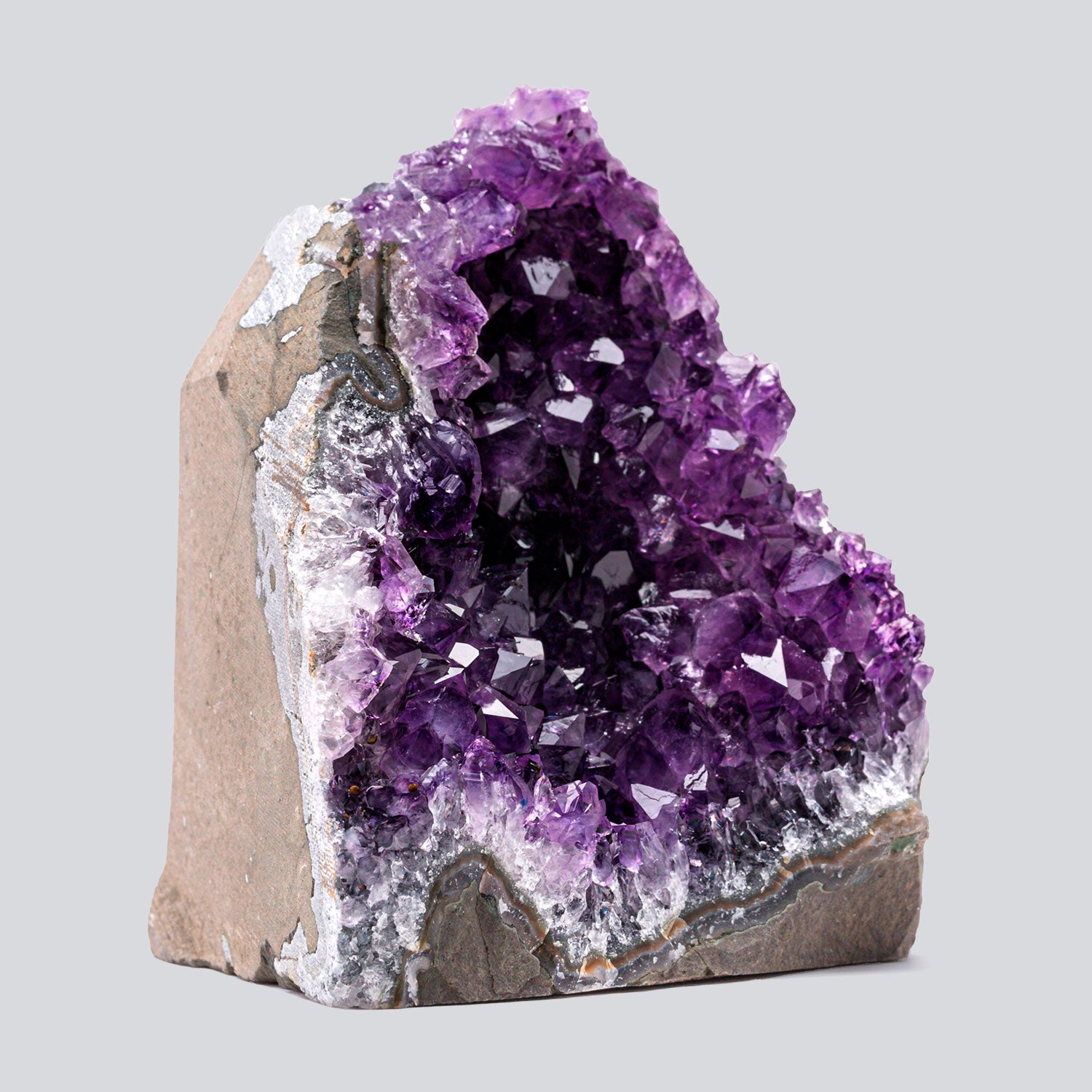
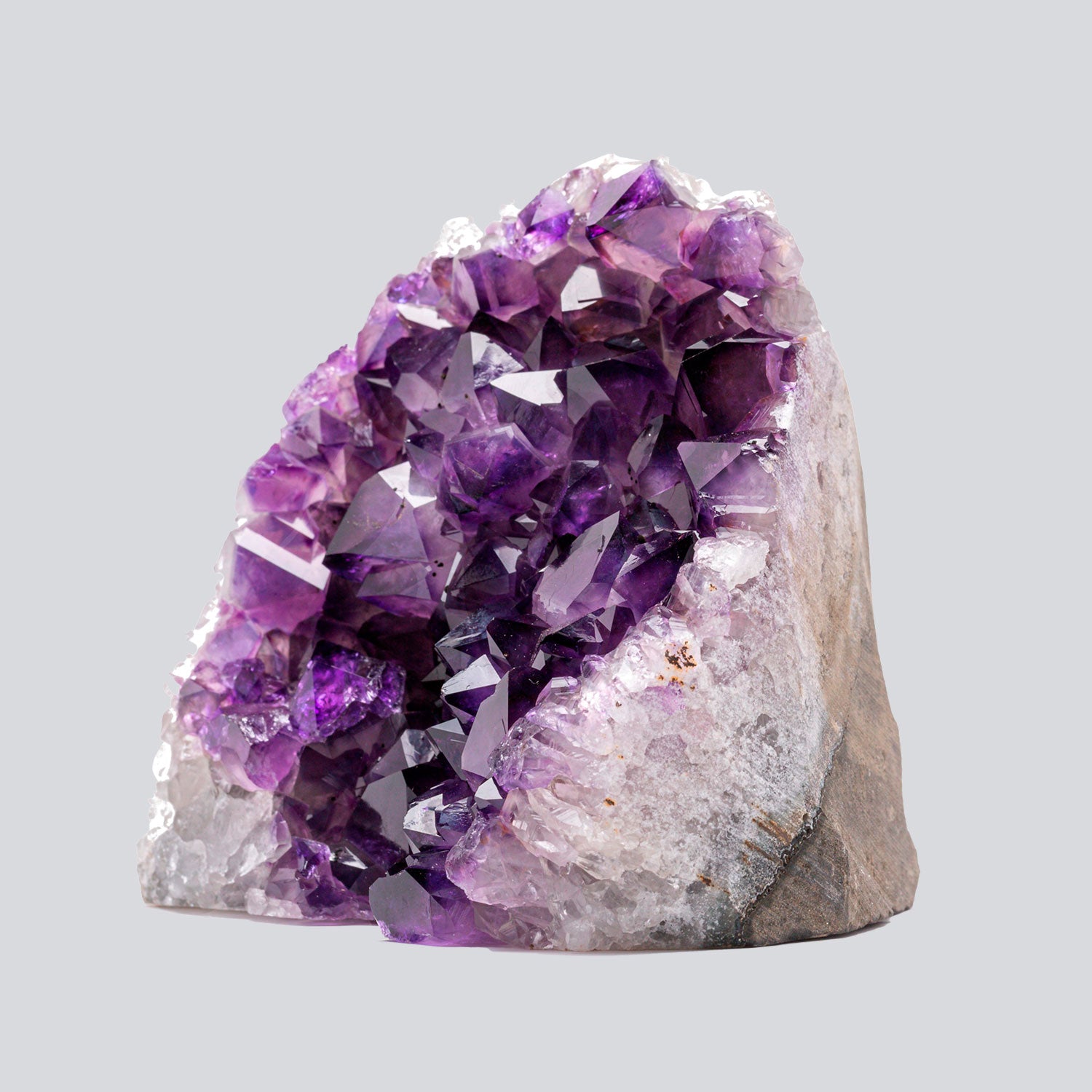
The deep, saturated purple that defines Uruguayan specimens comes from specific geological conditions: smaller volcanic pockets, higher iron concentrations, and slower crystal formation. The result is a color that Brazilian deposits simply cannot replicate at scale.
For the American buyer comparing options, the premium is justified by three factors:
- Color depth: Uruguayan amethyst displays rich violet to wine-red hues. Brazilian amethyst trends toward lighter lavender and pale purple.
- Rarity: Uruguay's deposits are smaller and more limited. Fewer pieces reach the market, which sustains value over time.
- Collector-grade consistency: The compact formation and dense crystal walls of Uruguayan geodes make them more structurally impressive at smaller sizes — a critical advantage for interior design use.
When you see a significant price difference between two amethyst geodes, origin is almost always the reason.
Color: The Most Visible Difference
Side by side, the distinction is immediate.
Uruguayan amethyst — also called deep purple amethyst — presents a saturated, almost velvety purple. In low light, it can appear nearly black. In natural light, it reveals complex violet and burgundy undertones. This is the color most people picture when they think of a truly premium amethyst.
Brazilian amethyst is lighter and more translucent. The pale lavender tones are beautiful in their own right, but they read as a different stone entirely when placed next to a Uruguayan specimen.
For collectors and interior designers sourcing statement pieces, Uruguayan amethyst geodes deliver a visual authority that lighter stones cannot match.
Formation and Structure
Geography shapes more than color — it determines the physical character of the crystal.
Uruguayan amethyst forms in smaller volcanic cavities, producing:
- Shorter, denser crystal points
- Thicker geode walls
- Compact, grounded formations
- Smaller overall specimen sizes with high visual impact per inch
Brazilian amethyst develops in expansive volcanic pockets, creating:
- Longer, more elongated crystals
- Cathedral and church formations
- Larger overall geode sizes
- Lighter, more open structures
Uruguayan pieces tend to feel substantial and contained — they anchor a space. Brazilian specimens command attention through scale and reach. Both have a place in a well-curated collection, but they serve different design intentions.
Rarity and Long-Term Value
Brazilian amethyst is abundant. Large-scale mining operations produce significant volume, which keeps prices accessible — especially for larger formations.
Uruguayan amethyst is genuinely scarce. Limited deposits, smaller extraction volumes, and consistent global demand from collectors and designers mean that quality Uruguayan pieces hold their value. For buyers thinking beyond decoration — toward acquisition — Uruguayan amethyst quality is the benchmark.
This is not a marketing distinction. It's a geological and market reality that any serious collector or interior designer will confirm.
How to Choose Between Them
The right choice depends on what you need the piece to do.
Choose Uruguayan amethyst if you want:
- The deepest, most saturated purple available
- A compact, high-impact specimen for a focused space
- Collector-grade provenance and rarity
- A piece that justifies its price through geological distinction
Choose Brazilian amethyst if you prefer:
- Lighter, more translucent lavender tones
- Dramatic scale — cathedral formations and large geodes
- More accessible pricing for oversized pieces
- An open, expansive visual presence
Browse our amethyst crystal clusters and amethyst geodes to compare both origins directly.
Frequently Asked Questions
What is the difference between Uruguayan and Brazilian amethyst?
The primary difference is color depth and rarity. Uruguayan amethyst displays deeper, more saturated purple tones and is significantly rarer than Brazilian amethyst, which tends toward lighter lavender hues and larger formations.
Why is Uruguayan amethyst more expensive than Brazilian?
Uruguayan amethyst commands higher prices due to its rarity, superior color depth, and limited supply. Smaller deposits and slower formation conditions produce fewer collector-grade pieces, which sustains market value.
Is Uruguayan amethyst better quality than Brazilian?
For color intensity and rarity, yes — Uruguayan amethyst is widely considered the highest quality amethyst available. Brazilian amethyst excels in size and dramatic formations. The best choice depends on your priorities.
Why is Uruguayan amethyst so dark?
Higher iron concentrations and specific volcanic formation conditions in Uruguay create the deep, saturated purple that distinguishes Uruguayan specimens from lighter Brazilian amethyst.
Can you tell Uruguayan and Brazilian amethyst apart visually?
Usually, yes. Uruguayan amethyst's deep violet-to-wine color and compact, dense crystal structure are visually distinct from Brazilian amethyst's lighter tones and elongated crystal formations.
Are large amethyst geodes always Brazilian?
Not always, but the largest cathedral formations are typically Brazilian due to the scale of their volcanic deposits. Uruguayan geodes are generally smaller but denser and more richly colored.






Share: