

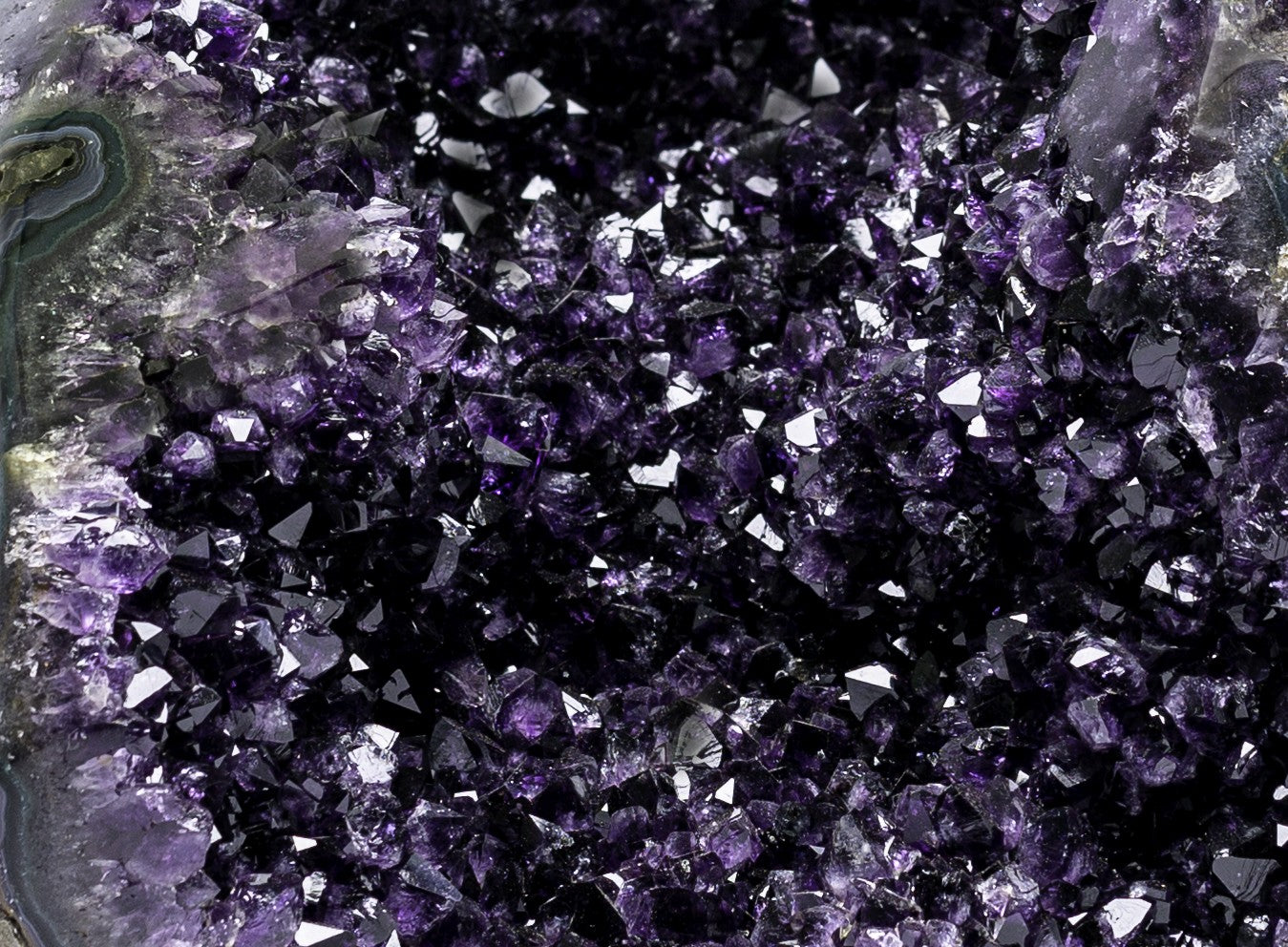
What Is a Geode Rock?
A geode rock is a hollow, rounded stone with a crystal-lined interior — formed over millions of years inside volcanic bubbles or sedimentary cavities. The word geode comes from the Greek 'geoides' meaning 'earth-like.' Geodes form in two main environments: volcanic basalt, like the ancient lava flows of Uruguay, and sedimentary limestone cavities.
Amethyst meaning has remained consistent across 4,000 years of human history: calm, clarity, and spiritual protection.
Traditionally known as the stone of serenity, amethyst has long been associated with balance and clear thinking. Today, many people turn to it for:
- Calm energy — to soften the edges of a busy day.
- Clarity — a reminder to slow down and think clearly.
- Spiritual depth — a subtle connection to intuition and reflection.
The name amethyst comes from the Greek amethystos — meaning 'not intoxicated.' Ancient Greeks believed the stone kept the mind clear and sober. European royalty wore it as a symbol of wisdom and divine authority, setting it alongside sapphires and rubies in crowns and ecclesiastical treasures.
Today, amethyst meaning has expanded into modern life: it's the stone people reach for when they want their home to feel grounded, intentional, and beautiful.
How Do Geode Rocks Form?
The formation of a geode rock is a story told in geological time — patient, precise, and extraordinary.
Step 1 — A cavity is born. Deep within cooling volcanic lava, gas bubbles become trapped as the rock solidifies around them. In sedimentary environments, organic matter decays inside limestone, leaving behind a hollow pocket. Either way, the result is the same: a sealed chamber waiting to be filled.
Step 2 — Mineral-rich water seeps in. Over thousands to millions of years, silica-rich groundwater percolates through the surrounding rock and enters the cavity through microscopic fractures. The water carries dissolved minerals — silica, iron, manganese — each one a building block for what comes next.
Step 3 — Crystals grow inward. As the water slowly evaporates or cools, minerals begin to crystallize on the interior walls. The specific mineral composition of the water determines what grows: pure silica produces quartz, trace iron and manganese produce the violet hues of amethyst, and calcium carbonate yields calcite. The slower the process, the larger and more defined the crystals.
In Uruguay's Artigas region, the basaltic lava flows that created these cavities millions of years ago now yield some of the world's deepest-colored amethyst geodes.
Types of Geode Rocks
Not all geodes are created equal. The mineral composition of the surrounding rock and the chemistry of the groundwater determine what grows inside — and how rare and valuable the result becomes.
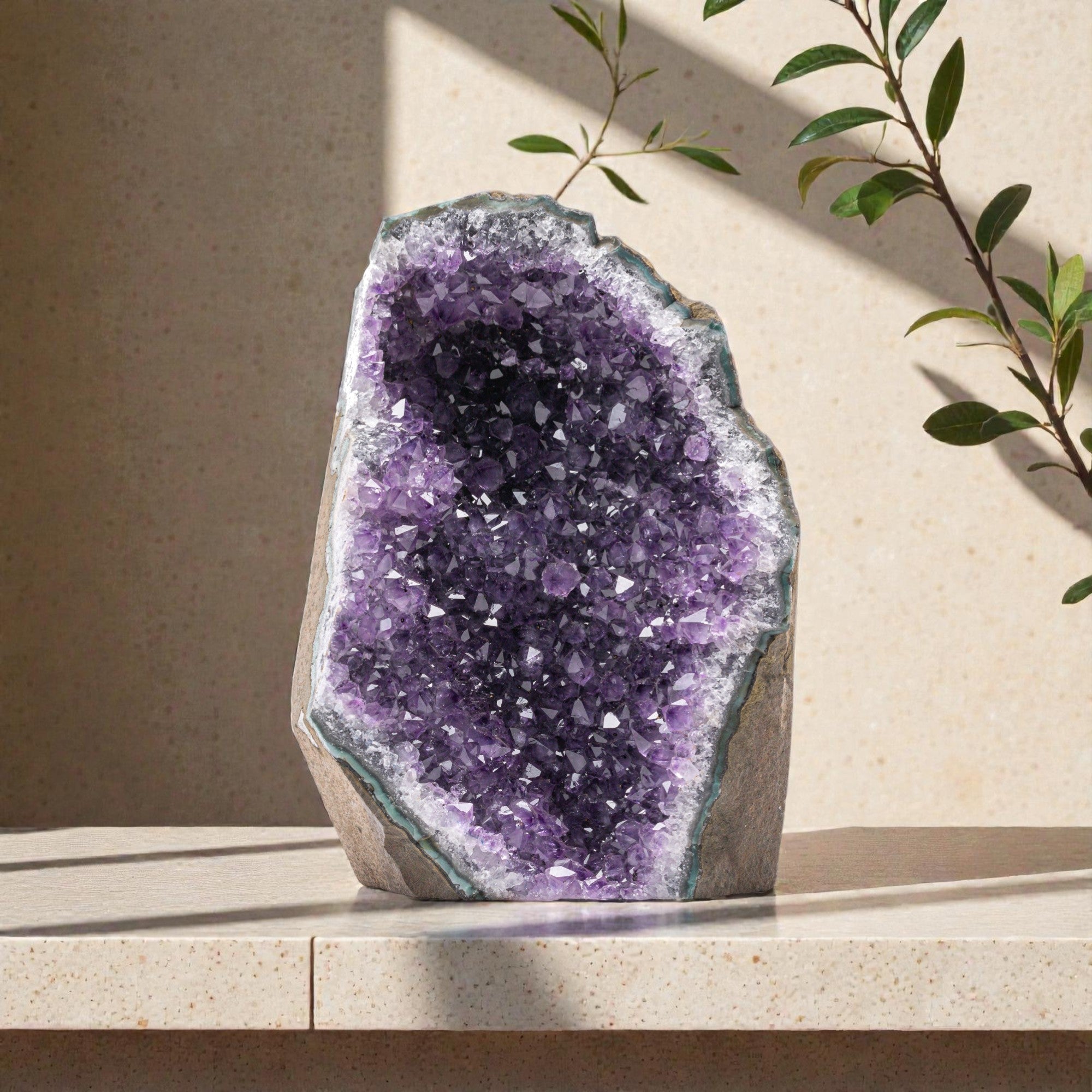
Amethyst geodes are the most prized of all geode types. Their deep violet interiors — ranging from pale lavender to rich royal purple — are produced by trace amounts of iron and natural irradiation within the host rock. The finest specimens come from Uruguay and Brazil, with Uruguayan amethyst consistently showing deeper, more saturated color.
Quartz geodes are the most common variety, found across every continent. Their interiors range from clear to milky white, and while less dramatic than amethyst, they remain beautiful natural objects with strong structural crystal formations.
Calcite geodes form in sedimentary limestone regions and are distinguished by their translucent, often pale yellow or white interiors. Their crystals tend to be blocky rather than pointed, giving them a softer, more diffuse appearance.
Agate geodes are prized for their banded patterns — concentric rings of color that form as successive layers of silica deposit on the cavity walls. Their graphic quality makes them particularly popular in interior design and decor.
Cathedral geodes are the most dramatic of all: oversized amethyst formations with multiple crystal peaks rising from a natural basalt base, often reaching several feet in height. Our large amethyst cathedrals represent the pinnacle of geode collecting — geological sculptures that anchor any room they inhabit.
What Is Amethyst Used For?
Amethyst is one of the most versatile natural stones — equally at home in a meditation corner, a design-forward living room, or a carefully chosen gift box.
Home decor and energy:
- As a statement piece in living spaces — its presence shifts the energy of a room in a way few objects can. Browse our amethyst geode collection to find the right scale for your space.
- As a focal point in meditation or reading corners, where its violet depth encourages stillness.
- As a natural sculpture that requires no maintenance — no watering, no charging, no upkeep. Just presence.
Wellbeing and intention:
- Many people place amethyst near their workspace for mental clarity — a quiet visual anchor in a busy environment.
- In the bedroom, it's associated with calm sleep and reduced anxiety. A geode on a nightstand becomes a nightly ritual in itself.
- As a grounding element in high-stress environments, where its energy functions like a slow exhale.
Gifting:
- Amethyst is the February birthstone — deeply meaningful for birthdays in that month.
- It is the traditional stone for 6th wedding anniversaries, making it a rare and considered gift.
- As a housewarming or "forever piece" gift, it carries lasting presence — something that will still be in a home decades from now.
At Emporion Gems, we believe the best use of amethyst is simply this: to live with it. Not locked away, but present — a natural reminder of calm in a busy world.
A Little History
- Ancient Greeks and Romans wore amethyst for focus and protection.
- European royalty used it in crowns and church treasures as a symbol of wisdom.
- Across cultures, its violet color has always been linked with spirituality and contemplation.
How to Use Amethyst in Your Home
Here's where design meets meaning. A giant amethyst in a living room corner can become a sculptural statement that instantly changes the vibe of a space. Smaller clusters on shelves, nightstands, or desks bring gentle flashes of color — and a quiet sense of balance — into everyday routines. For a deeper look at placement and styling, explore our guide on how to use amethyst at home.
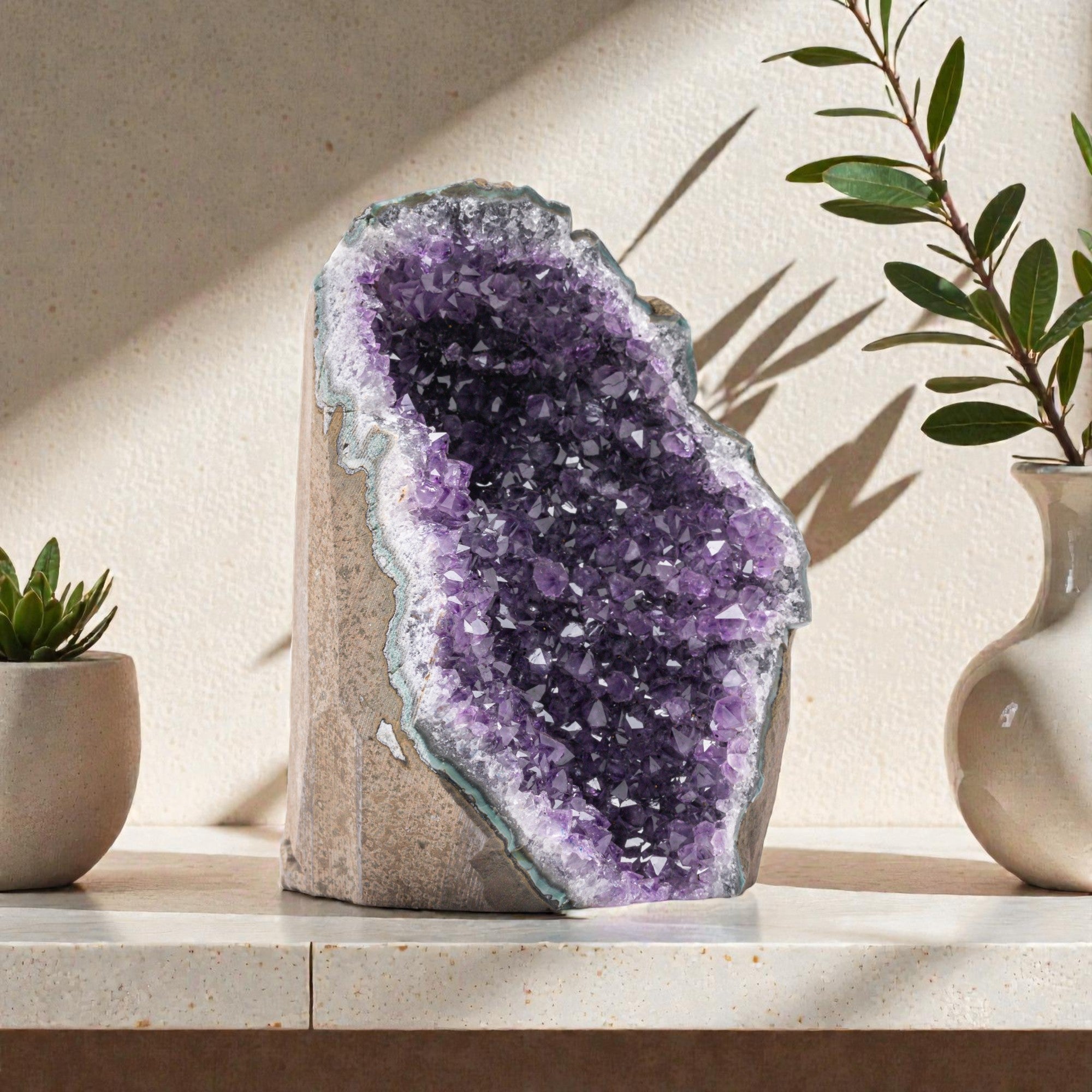
Placement: A large amethyst geode works best as a floor or shelf piece — somewhere it can be seen from across the room. Its presence should feel inevitable, not decorative.
Pairing: Amethyst pairs naturally with linen, wood, marble, and aged brass. Its violet depth grounds warm neutrals and softens cool grays.
Size guidance: Smaller clusters work on desks, nightstands, and bookshelves. Larger cathedral geodes belong in living rooms, entryways, or meditation spaces where they can anchor the room. If you're unsure where to start, our guide on how to choose the right amethyst size walks through every scenario.
Why Uruguayan Amethyst? Emporion's Sourcing Story
At Emporion Gems, our amethysts come directly from Uruguay, chosen for their depth of color and unique shapes. Each piece is one-of-a-kind — part sculpture, part story, and all natural.
The amethyst from Artigas, Uruguay forms in ancient basaltic lava flows — the same geological conditions that produce its signature deep violet color. Brazilian amethyst, by contrast, tends toward lighter tones because of different mineral composition. The difference is visible immediately: Uruguayan amethyst is richer, more saturated, and more structurally dramatic.
Uruguayan amethyst is darker and more saturated than Brazilian amethyst due to the specific basalt mineral composition of the Artigas region. Unlike mass-produced crystals, each Emporion geode rock is hand-selected for depth of color, intact crystal formation, and natural base stability.
Each piece in the Emporion collection is hand-selected at the source for color depth, crystal formation, and natural base stability. No dyes, no treatments, no compromises.
Ready to find yours? Explore our amethyst collection — every piece is photographed as-is, exactly as it will arrive.
Why It Works Now
Amethyst's meaning translates beautifully into modern homes: it's stylish, versatile, and grounding. Think of it as a natural accent piece that doubles as décor and a mood-setter.
FAQ: Geode Rock Questions Answered
What is a geode rock?
A geode rock is a hollow stone with a crystal-lined interior formed by mineral-rich water crystallizing inside rock cavities over millions of years. The crystals inside are most commonly amethyst, quartz, or calcite. Each geode is unique — no two have the same interior color, shape, or crystal formation.
What is inside a geode rock?
Crystals — most commonly amethyst, quartz, or calcite. The type and color depend on the mineral composition of the water that filled the cavity. Uruguayan geodes are known for unusually deep purple amethyst interiors formed in ancient basaltic lava flows.
Are geode rocks worth anything?
Value ranges from $5 for small quartz geodes to $3,500+ for large Uruguayan amethyst cathedrals. Key factors are size, crystal color depth, formation type, and origin. Uruguayan amethyst geodes hold their value better than Brazilian varieties due to their rarity and superior color saturation.
What is the rarest type of geode rock?
Cathedral amethyst geodes — large formations with multiple crystal peaks rising from a natural basalt base — are among the most prized. Museum-quality specimens from Artigas, Uruguay, can weigh over 100 lbs and take more than 100 million years to form.
How do I know if a geode rock is real?
Real geodes have uneven, rough exteriors and uniformly crystallized interiors. They feel substantial for their size. Fakes are often too symmetrical, dyed, or feel hollow. Purchasing from certified sources like Emporion Gems ensures each piece is 100% natural and ethically sourced directly from Uruguay.
FAQ: Amethyst Meaning and Uses
What is the spiritual meaning of amethyst?
Amethyst has been associated with calm, clarity, and spiritual protection across cultures for thousands of years. Its name comes from the Greek amethystos meaning 'not intoxicated' — a symbol of mental clarity and sobriety of mind. Today it's considered a stone of inner peace, intuition, and grounded energy — qualities that translate naturally into modern home and wellness spaces.
What is amethyst used for?
Amethyst is used in home decor as a natural statement piece, in meditation spaces for focus and calm, and as a meaningful gift for birthdays (February birthstone) and anniversaries (6th year). Many people place it in workspaces for clarity or in bedrooms for restful sleep. Its primary use is simply to be present — a natural, beautiful anchor in everyday life.
What does amethyst do in a home?
In a home, amethyst functions as both a sculptural object and an energetic presence. A large geode anchors a room visually while adding natural texture and depth. Many people report that spaces with amethyst feel calmer, more intentional, and more grounded. Whether you approach it spiritually or purely aesthetically, the effect on a room's atmosphere is real.
Is amethyst a good gift?
Yes — amethyst is one of the most meaningful natural gifts because it lasts forever and carries genuine symbolism. It's the February birthstone, the traditional 6th anniversary stone, and a universally recognized symbol of calm and clarity. A natural Uruguayan amethyst from Emporion is especially meaningful because each piece is one-of-a-kind and comes directly from source.
What does amethyst look like?
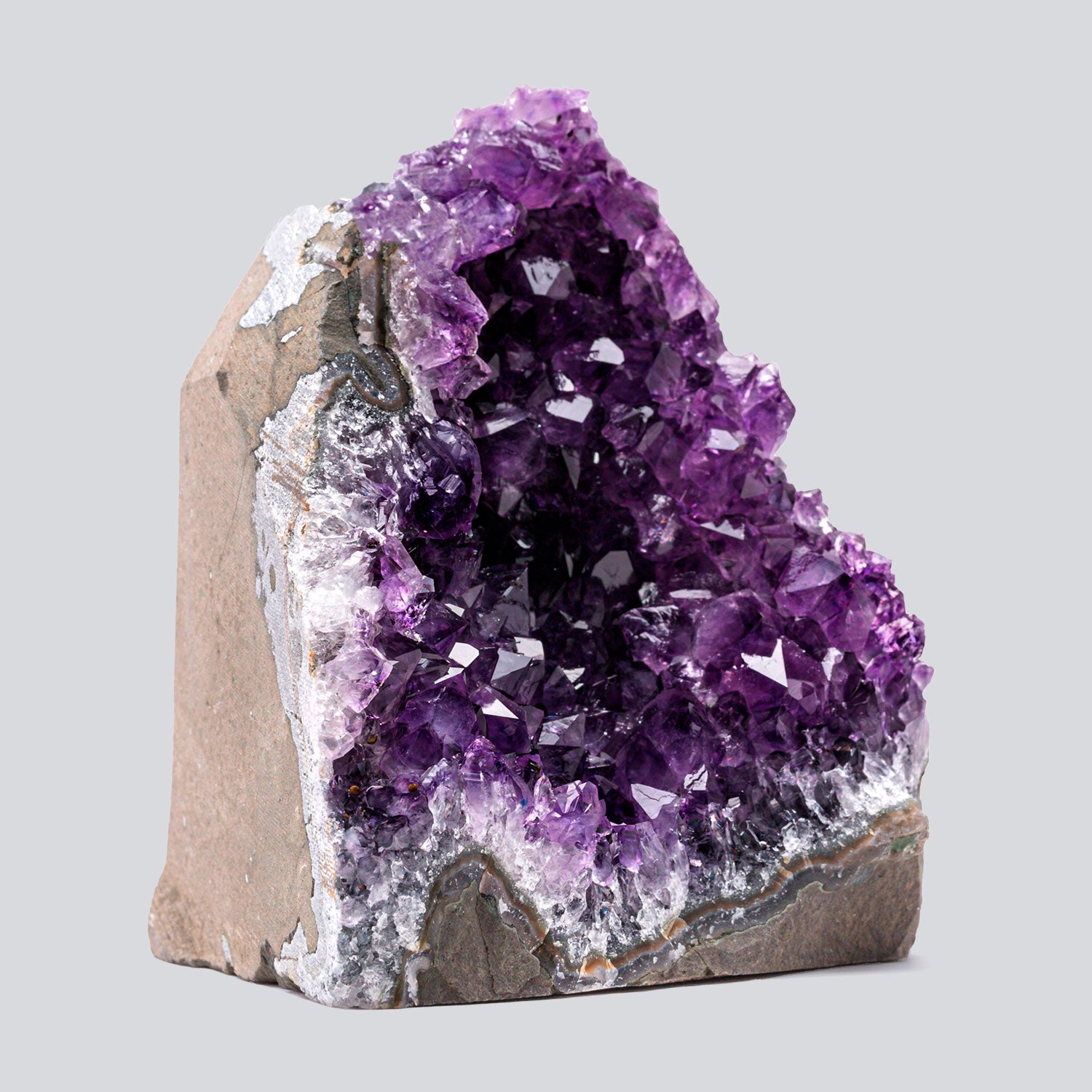
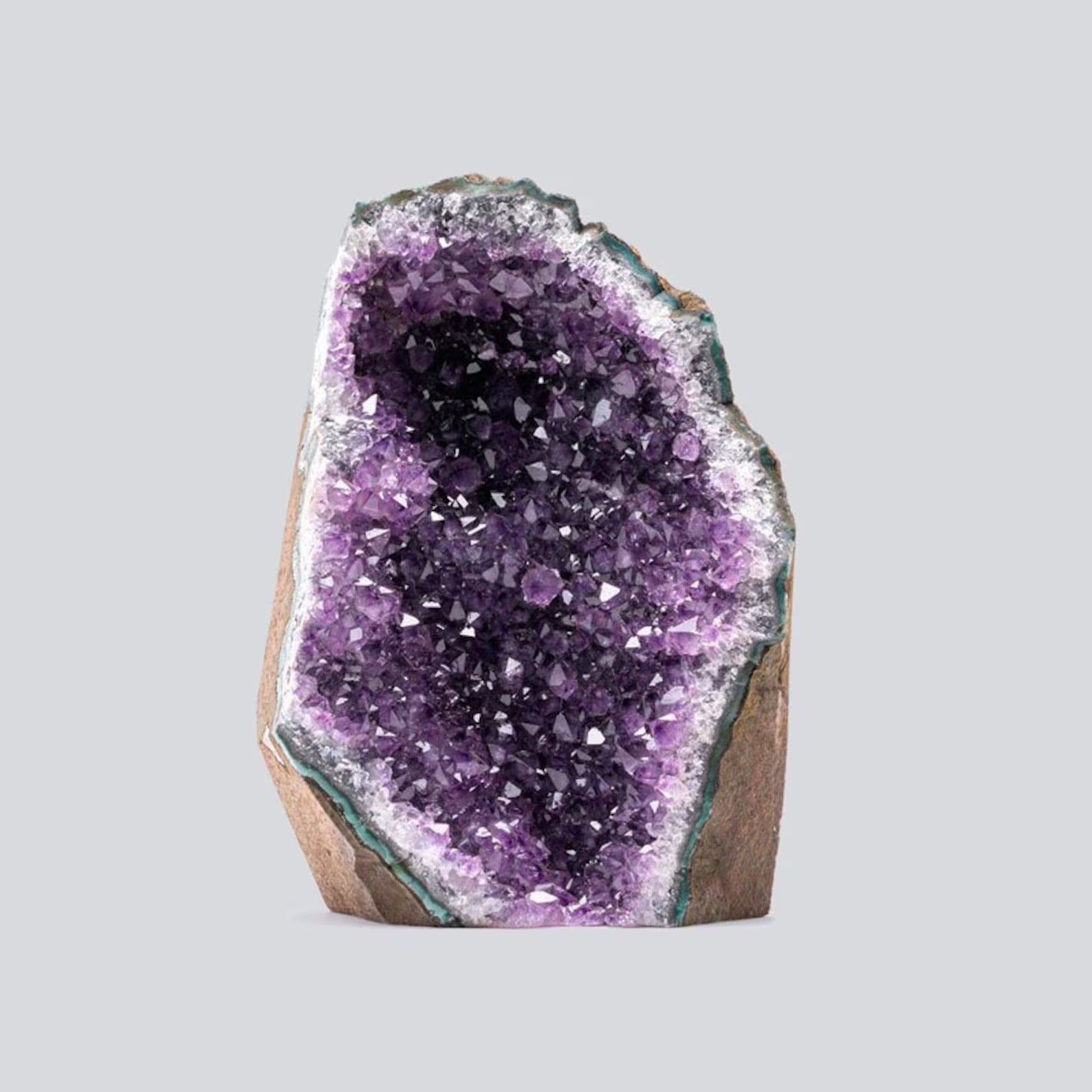
Natural amethyst ranges from pale lavender to deep violet-purple. The finest specimens — particularly from Uruguay's Artigas region — show a rich, saturated purple that photographs beautifully and deepens in natural light. Inside a geode, the crystals grow inward from the basalt walls, creating a shimmering interior of geometric points in varying shades of violet.
Every geode rock in the Emporion collection is a singular geological event — formed over millions of years, sourced with intention, and chosen for the quality of its crystal interior. Shop natural crystals and find the piece that belongs in your space.





Share: