

Extra Large Amethyst Geodes: What They Cost and What Drives the Price
An extra large amethyst geode, roughly 19 to 50 lbs, represents a different category of geological rarity than anything in the small or hand-size range. Prices for these specimens run from $969 to $2,506.97 at Emporion Gems, and that range is not arbitrary. Every factor that separates a decorative piece from a museum-grade specimen has a measurable impact on price. This guide focuses specifically on extra large Uruguayan amethyst geodes: what they cost, what drives the price, and how to evaluate one before you buy.
For pricing across all size categories, from small clusters to collector specimens above 50 lbs, see our complete amethyst price guide.
Extra Large Amethyst Geodes from Our Collection (19 to 50 lbs)
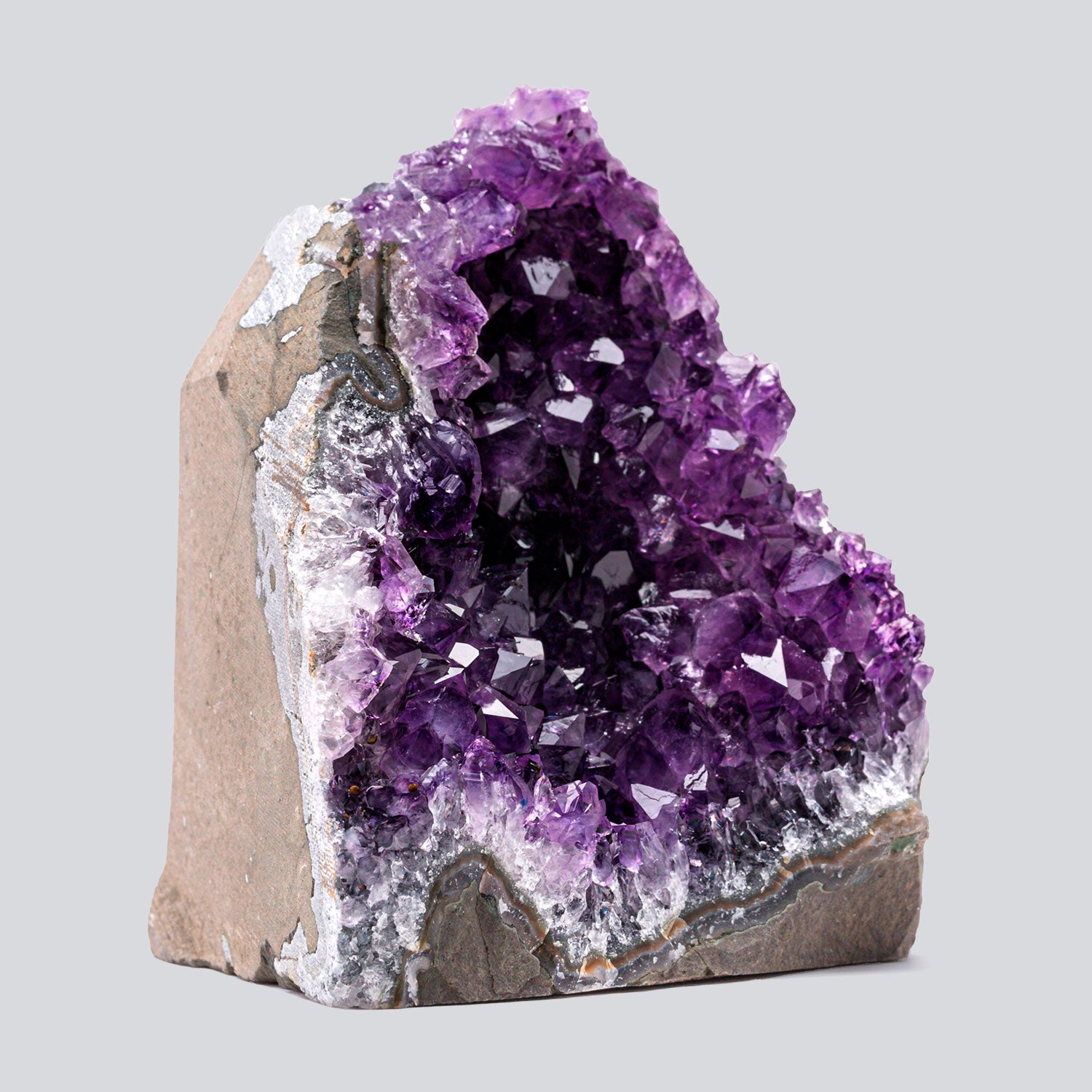
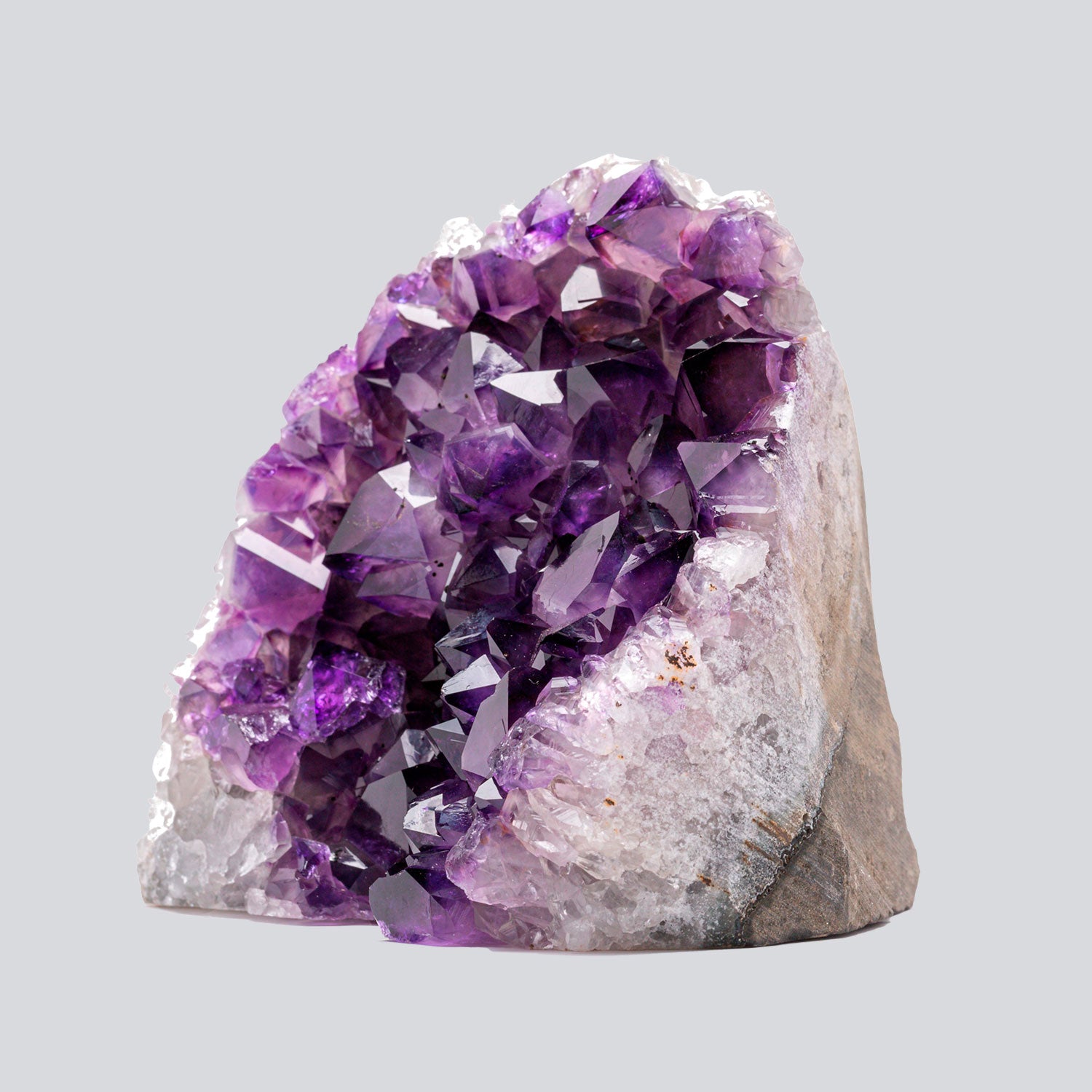
At Emporion Gems, our extra large specimens are ethically sourced from Uruguay, primarily the Artigas region, the global benchmark for deep violet amethyst. Every piece is photographed in natural light so you see exactly what you are getting. Here is how our current XL catalog breaks down:
- Large Uruguayan Amethyst Egg, 19.17 lb — $969.00
- Large Amethyst Geode Cave, 19.66 lb — $1,063.93
- Large Amethyst Cluster with Cut Base, 21.82 lb — $1,165.83
- Deep Purple Amethyst Geode, 24.57 lb — $1,295.90
- Large Amethyst Cluster with Calcite, 28.72 lb — $1,491.32
- Deep Purple Amethyst Geode, 30.75 lb — $1,587.90
- Large Amethyst Crystal Geode, 32.60 lb — $1,674.90
- XL Amethyst Crystal Egg, 35.25 lb, Plum Noir, Artigas Uruguay — $1,799.90
- Extra Large Amethyst Cathedral Geode with Calcite, 50.25 lb — $2,506.97
The price increase from 19 lbs to 50 lbs is not linear. It reflects exponentially rarer geological conditions, longer crystal growth periods, and a much smaller percentage of what is extracted from any given mine.
The 5 Factors That Determine Extra Large Amethyst Geode Value
1. Origin
Uruguay amethyst, specifically from the Artigas department, is the global benchmark for quality. The geological conditions there produce a distinctively deep, blue-violet hue that Brazilian deposits rarely match. Every piece in our collection is sourced from Uruguay, with documented provenance.
2. Color Depth and Saturation
The most valuable extra large amethyst geodes display a rich, consistent violet across the full interior, not just at the tips. Pale lavender or uneven color significantly reduces value. Our selection process rejects pieces that do not meet our color standards, regardless of size or weight.
3. Crystal Formation Quality
Well-formed, sharp crystal points with clean terminations indicate slow, undisturbed growth, a marker of geological rarity. Cathedral formations, where crystals grow in layered spire-like clusters, are among the most prized. Broken, cloudy, or stunted crystals lower value considerably.
4. Size and Weight
At the extra large scale, size commands a premium that scales non-linearly with weight. A 19 lb geode is not simply bigger than a 5 lb geode. It represents a fundamentally different geological event, with a longer growth period and a much smaller extraction yield. Each additional pound in this range reflects increasing rarity, not just additional material.
5. Base and Presentation
A well-cut, stable base affects both display quality and perceived value. All our extra large pieces are prepared to stand securely and display the interior fully, with no improvised support needed. For floor-standing specimens, base stability is a safety consideration as much as an aesthetic one.
Why Uruguay Amethyst Commands a Premium at This Scale
Brazilian amethyst geodes are more abundant and typically lighter in color. Uruguay geodes, particularly from Artigas, are denser, darker, and rarer. The difference is immediately visible when you compare them side by side. At the extra large scale, this distinction becomes even more pronounced: the deep violet saturation that defines Uruguayan amethyst is harder to achieve and maintain across a larger crystal cavity, which is why large, high-quality Uruguayan specimens are increasingly difficult to source.
Is an Extra Large Amethyst Geode Worth the Investment?
For the right buyer, yes. Premium Uruguay amethyst geodes at this scale hold decorative and collector value over time. They are not liquid assets, but they are not depreciating objects either. A museum-grade piece purchased thoughtfully is something you can pass down.
More immediately: an extra large amethyst geode is one of the few decorative objects that commands attention in any room, at any scale, without requiring a design degree to place correctly. A 19 to 50 lb specimen becomes the gravitational center of a room's design, whether placed on a reinforced console, a pedestal, or directly on the floor.
How to Evaluate an Extra Large Geode Before You Buy
- Ask for origin documentation. Reputable sellers can tell you where a piece was mined and provide provenance records.
- Assess color in natural light. Artificial lighting can mask pale or uneven saturation. Our product photography uses natural light for this reason.
- Check crystal integrity. Look for broken points, repairs, or filled areas. These reduce value and affect long-term display quality.
- Verify the base. A geode that cannot stand safely is a display problem and a safety concern. Confirm the base is cut and stable before purchase.
- Compare weight to price. Unusually low prices for extra large pieces often signal lower-grade material, misrepresented origin, or condition issues worth investigating.
- Confirm surface requirements. Pieces above 19 lbs require reinforced shelving or floor placement. Confirm your space can support the weight before ordering.
Browse Our Extra Large Amethyst Geode Collection
Every piece is hand-selected from Uruguay, photographed in natural light, and ready to ship. Each extra large specimen is a one-of-a-kind geological formation with documented provenance and full weight specifications.
Shop Extra Large Amethyst Geodes from Uruguay
For pricing on all size categories, from small clusters starting at $50.90 to collector specimens above 50 lbs, visit our complete amethyst price guide.






Share: