

A crystal is not a static object.
Over time, dust settles, light exposure shifts color, and placement affects how a piece ages. Proper care doesn't require elaborate rituals — it requires awareness and occasional attention.
This guide covers practical maintenance to keep your amethyst crystals looking their best for years.
Cleaning Your Amethyst: Methods and Frequency
Dust and residue accumulate gradually, dulling a crystal's natural brilliance.
Regular Dusting (Weekly to Monthly)
For routine maintenance, use a soft, dry cloth or a clean makeup brush to remove surface dust from crystal points and crevices. This prevents buildup and maintains clarity without introducing moisture.
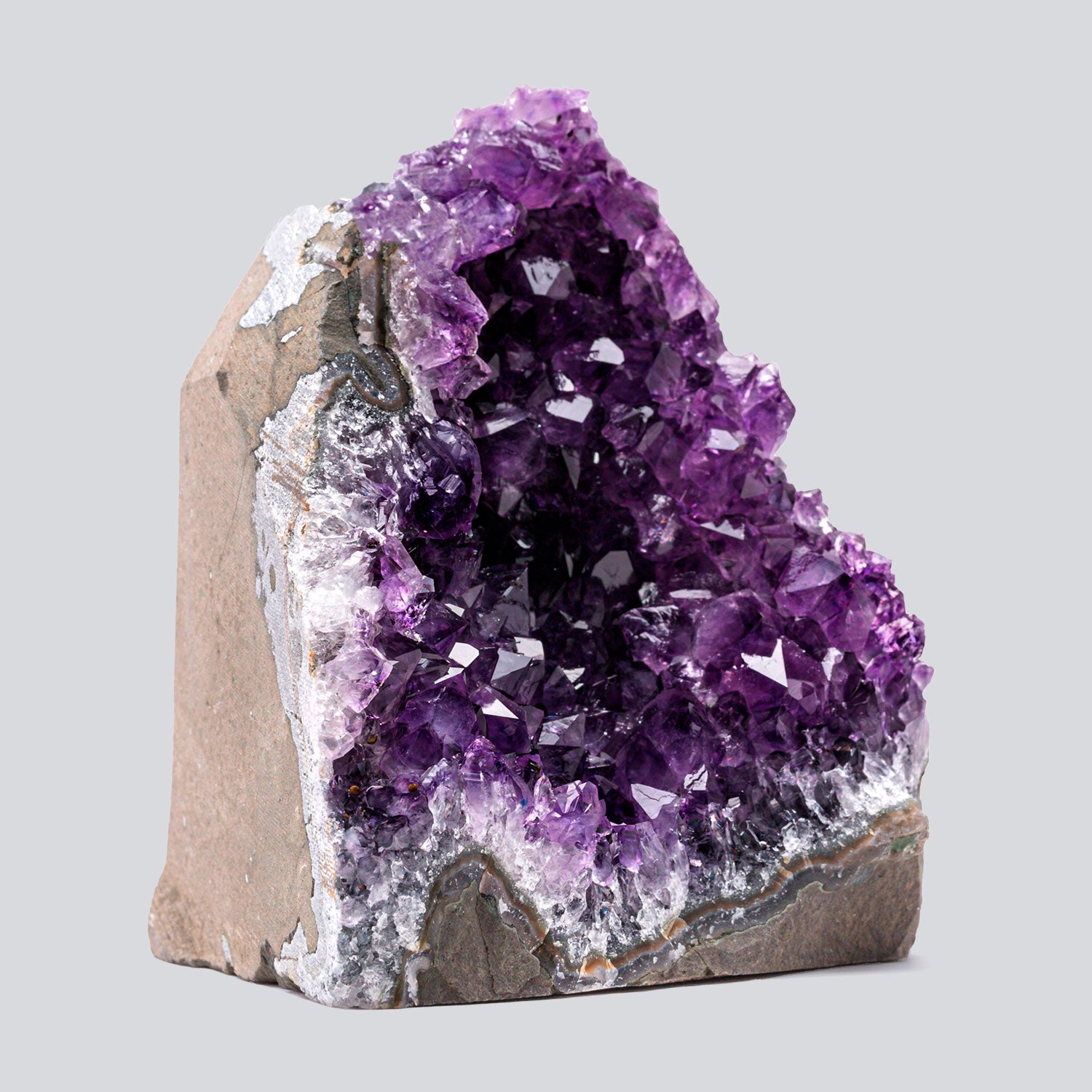
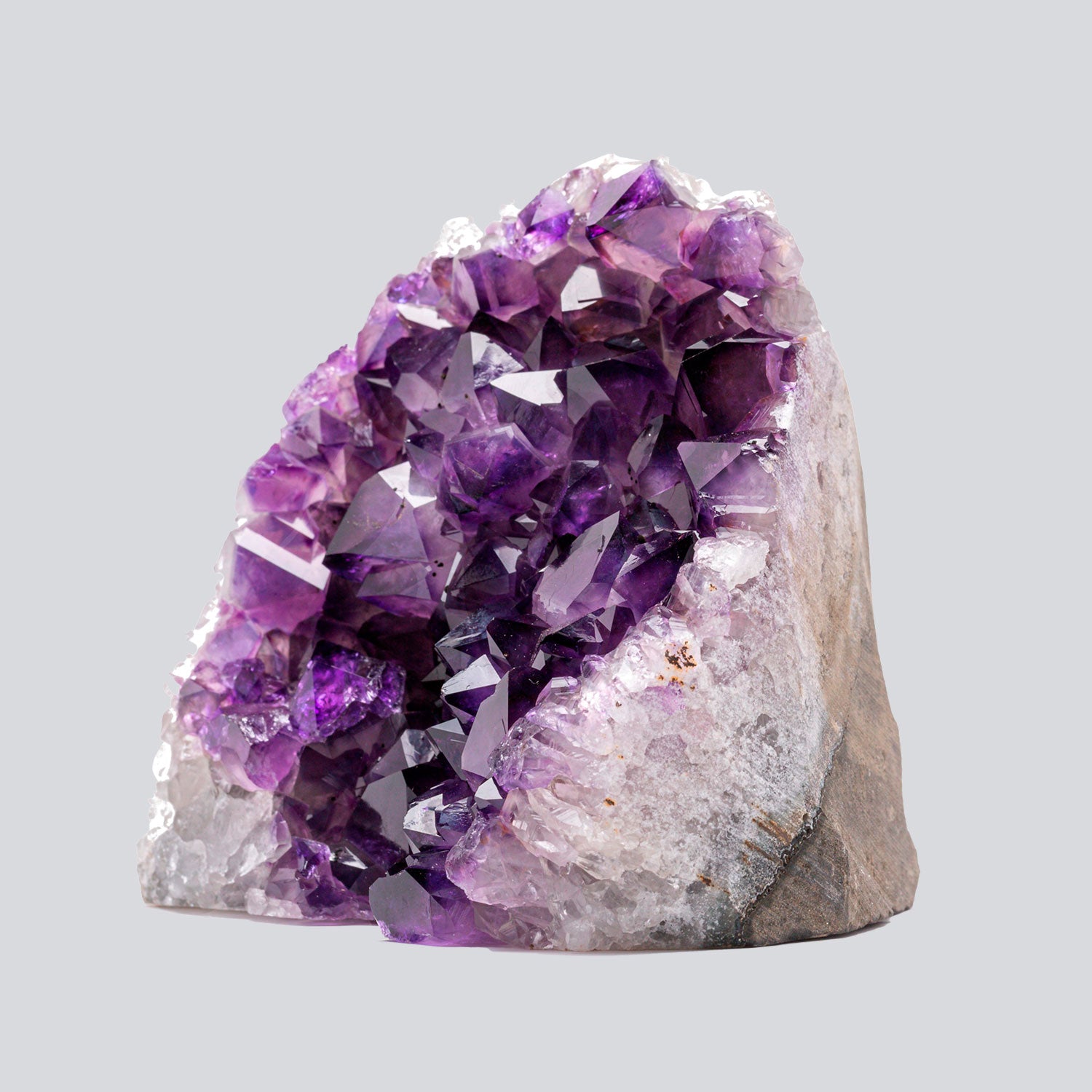
Pay special attention to the spaces between points on amethyst clusters where dust tends to collect.
Deep Cleaning (Every 3-6 Months)
When dry dusting isn't enough, use lukewarm water and a soft cloth or brush.
Process:
- Rinse the crystal under lukewarm running water
- Use a soft-bristled brush (toothbrush works well) to gently clean between points
- Avoid soap or chemical cleaners — water alone is sufficient
- Pat dry immediately with a soft cloth
- Allow to air dry completely before returning to display
Never soak amethyst for extended periods or use hot water, as temperature changes can cause internal stress fractures in rare cases.
What to Avoid
Do not use:
- Harsh chemicals or household cleaners
- Abrasive materials (scrub brushes, scouring pads)
- Ultrasonic cleaners (can damage internal structure)
- Steam cleaning
- Vinegar or acidic solutions
Amethyst is relatively durable (7 on the Mohs hardness scale), but chemical exposure can dull its surface or affect color over time.
Sunlight and Color Fading: What You Need to Know
Amethyst's purple color comes from iron impurities and natural irradiation. Prolonged direct sunlight can gradually fade this color.
Understanding the Risk
Color fading happens slowly — we're talking months or years of consistent direct sunlight, not occasional exposure. A crystal near a window that receives a few hours of morning light won't fade noticeably. One sitting in intense afternoon sun for 8+ hours daily will eventually lighten.
Uruguayan amethyst, with its deeper saturation, tends to be slightly more resistant to fading than paler Brazilian specimens, but both can be affected over time.
Safe Placement Guidelines
Low risk locations:
- North-facing windows (in Northern Hemisphere)
- Rooms with filtered or indirect light
- Spaces that receive morning sun only
- Interior shelves away from windows
Higher risk locations:
- South-facing windows with direct afternoon sun
- Windowsills in full sun for multiple hours daily
- Outdoor display areas
- Conservatories or sunrooms
If you love how a crystal looks in a sunny spot, enjoy it there — just understand that the color may soften over years. Some people appreciate this natural aging process.
Optimal Placement for Longevity
Where you place a crystal affects more than aesthetics.
Temperature Considerations
Avoid extreme temperature fluctuations. Don't place crystals:
- Directly above radiators or heating vents
- In unheated spaces that freeze in winter
- Near fireplaces where they experience repeated heating and cooling
- In bathrooms with frequent hot showers (humidity and temperature swings)
Stable room temperature (60-75°F / 15-24°C) is ideal for all crystal types.
Humidity and Moisture
While amethyst itself isn't damaged by humidity, the minerals often found in amethyst geodes (like calcite) can be affected by excessive moisture.
Bathrooms are generally fine for display, but avoid placing crystals directly in shower spray zones or areas with constant condensation.
Stable Surfaces
Larger specimens (5+ lbs) need secure placement. Ensure:
- The surface is level and stable
- The crystal's base sits flat without wobbling
- High-traffic areas won't result in accidental bumps
- Shelves can support the weight (especially for 10+ lb pieces)
For particularly tall or top-heavy formations, consider using museum putty or non-slip pads to prevent tipping.
Handling and Moving Your Crystals
Amethyst points can be sharp and delicate despite the mineral's overall hardness.
Safe Handling Practices
When moving crystals:
- Always use two hands for pieces over 2 lbs
- Grip from the base, not the crystal points
- Avoid grasping individual points, which can break under pressure
- Carry close to your body for better control
- Clear the path before moving large specimens
When Points Break
Despite careful handling, points occasionally break — especially on delicate formations or during shipping.
A broken point doesn't ruin a crystal. Many collectors appreciate the natural imperfection as part of the piece's story. If a break bothers you aesthetically, you can:
- Rotate the crystal to display the intact side
- Keep the broken point with the piece
- Accept it as natural evolution of the object
Avoid attempting to glue points back on — it rarely looks natural and can introduce chemicals to the crystal.
Long-Term Care: What to Expect Over Years
Crystals change slowly, but they do change.
Natural Aging
Over years, you might notice:
- Slight color softening if placed in bright light
- Dust accumulation in hard-to-reach crevices
- Minor surface scratches from cleaning or handling
- Subtle shifts in how light reflects through the crystal
These changes are normal and often add character rather than diminish value.
When to Deep Clean
Beyond regular dusting, deep clean your crystals when:
- You notice visible film or residue
- The crystal looks noticeably duller than when new
- You're moving or rearranging your space
- Seasonal cleaning (spring and fall work well)
Refreshing Placement
Don't hesitate to move crystals between rooms as your space evolves. A piece that worked beautifully in one location might feel even better somewhere new. Crystals are meant to be lived with, not preserved under glass.
Browse our new arrivals if you're considering adding to your collection or finding a companion piece for a different room.
Special Considerations for Different Formations
Amethyst Clusters
Crystal clusters with multiple points require extra attention during cleaning. Use a soft brush to reach between points, and ensure water doesn't pool in crevices where it might leave mineral deposits as it dries.
Amethyst Geodes
Geodes often have rough outer surfaces that can harbor more dust than polished formations. The exterior matrix may be more porous than the crystal interior, so avoid prolonged water exposure on the outer shell.
Crystal Pointers
Single crystal pointers are generally easier to clean but more vulnerable to tip damage. Handle by the base and store with adequate padding if not on display.
Storage for Crystals Not on Display
If you rotate your collection or store pieces seasonally:
- Wrap individually in soft cloth or bubble wrap
- Store in a cool, dry location away from direct sunlight
- Avoid stacking heavy pieces on top of delicate formations
- Label boxes if storing multiple pieces
- Check stored crystals annually for any unexpected changes
Building Your Collection Mindfully
As you care for your current pieces, you'll develop a sense of what works in your space and what requires more maintenance than you prefer.
This awareness helps inform future purchases. If you find yourself avoiding sunny spots due to fading concerns, you might prefer darker Uruguayan specimens. If you love the ease of smaller pieces, focus on the 1-3 lb range rather than large statement geodes.
Your collection should enhance your space, not create anxiety about preservation. The right pieces are the ones you enjoy living with daily.
Frequently Asked Questions
How often should I clean my amethyst crystal?
Dust weekly to monthly with a soft, dry cloth. Deep clean with lukewarm water every 3-6 months or when you notice visible dulling or residue buildup.
Will sunlight fade my amethyst?
Prolonged direct sunlight (multiple hours daily over months or years) can gradually fade amethyst's purple color. Occasional or indirect light exposure is generally safe. Avoid placing crystals in intense afternoon sun for extended periods.
Can I use soap to clean my amethyst?
No. Use only lukewarm water and a soft brush. Soap, chemicals, and household cleaners can leave residue or affect the crystal's surface over time.
What should I do if a crystal point breaks?
Accept it as natural evolution of the piece. You can rotate the crystal to display intact sides or keep the broken point with the specimen. Avoid gluing points back on, as it rarely looks natural.
Where should I not place my amethyst crystal?
Avoid direct placement above heating vents, near fireplaces, in areas with extreme temperature fluctuations, or in direct intense sunlight for multiple hours daily. Stable room temperature and indirect light are ideal.
Is it safe to put amethyst in the bathroom?
Yes, bathrooms are generally fine for amethyst display. Just avoid placing crystals directly in shower spray zones or areas with constant condensation, especially for geodes with secondary minerals like calcite.
How do I clean between the points of an amethyst cluster?
Use a soft-bristled brush (like a clean toothbrush) with lukewarm water to gently clean between points. Pat dry immediately and ensure no water pools in crevices.
Do amethyst crystals need any special care?
No elaborate rituals are needed. Regular dusting, occasional water cleaning, avoiding harsh chemicals, and protecting from prolonged direct sunlight covers all essential care.






Share: