

For a long time, crystal specimens lived on shelves. They were accents, small accompaniments to the real decisions in a room. That has changed. In residential and hospitality design, large format mineral specimens are increasingly treated the way a significant piece of art or furniture would be treated, as the object a room is built around, not the object added at the end.
This shift runs alongside two broader movements in interior design. One is the return to warm minimalism and quiet luxury, where value is expressed through material quality and history rather than visible branding. The other is a growing appetite for pieces with real geological origin, chosen for what they are rather than what they represent. Large amethyst specimens sit at the intersection of both. Some designers have started describing the way these pieces interact with a room's natural and artificial light as a kind of light architecture, a way of thinking about the specimen not as an object placed in a room, but as something that shapes how the room is lit and read.
From Decoration to Anchor Piece
An anchor piece is the element a room is designed around. Every other decision, the furniture layout, the lighting plan, the color palette, responds to it. In residential and boutique hospitality projects, designers have used sculptural furniture, singular art pieces, and now large mineral specimens in this role.
What separates an anchor piece from ordinary decor is scale and presence. A small object asks to be noticed. A true anchor piece changes the architectural reading of the space around it. This is why designers increasingly treat a large amethyst specimen the same way they would treat a piece of significant sculpture, giving it space, sightlines, and a considered relationship to the walls and openings around it.
Why Scale Changes Everything
Scale, more than any other factor, determines whether a specimen functions as an anchor piece or simply as decoration. A modestly sized piece reads as an accessory no matter how fine its color or clarity. A large format specimen, standing at true room scale, reorganizes the space around it the way a fireplace or a staircase does.
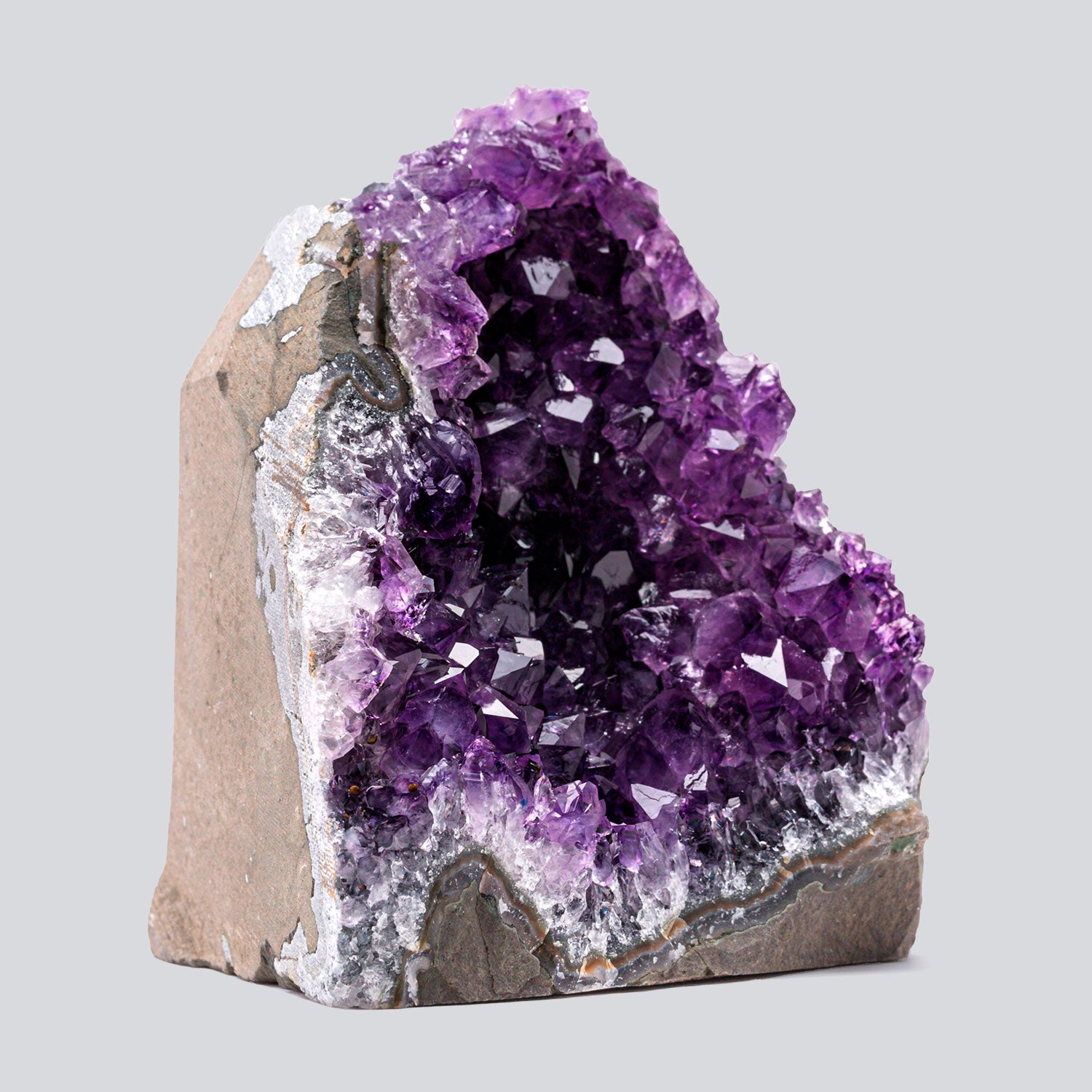
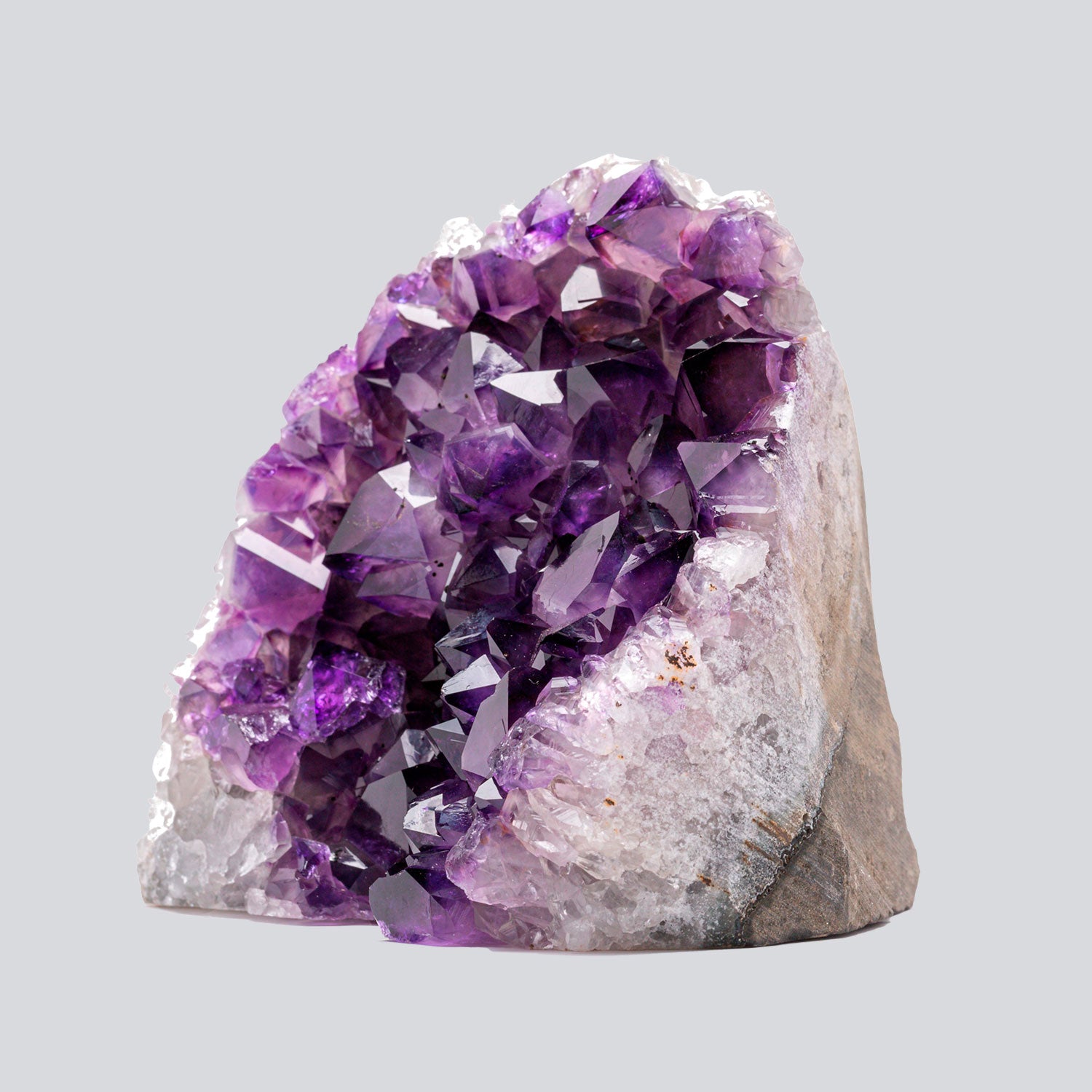
This is part of why designers working on entryways, living rooms, and hotel lobbies gravitate toward the largest, most architecturally present specimens available. The piece is not meant to compete with the room. It is meant to define it. Emporion Gems' Extra Large Unique Collection of Uruguayan amethyst specimens was developed with exactly this use in mind, pieces selected for their ability to hold a room on their own.
Light, Texture, and Placement
Amethyst behaves differently from most decorative materials because of how it interacts with light. Natural light passing through or across a large specimen shifts through the day, changing the way the piece reads from morning to evening. Artificial light, positioned deliberately, can turn a specimen into something closer to a light source itself, using the crystal's structure to soften and scatter illumination rather than simply reflecting it.
This is the practical reality behind the idea of light architecture. A specimen placed on the floor of an entryway, in a lit niche built into custom joinery, or on a low plinth beside a window, is being used as a tool for shaping light and atmosphere, not only as an object to look at. Designers working with these pieces think about the same questions they would ask of a lighting plan: where does the eye land first, and how does that change as the light in the room changes.
Origin as a Design Credential
As demand for large format specimens has grown, so has demand for imitations and treated stones. For designers and procurement teams sourcing pieces for high visibility projects, traceable origin has become a real point of due diligence, not a marketing detail.
Emporion Gems' specimens are sourced directly from Artigas, Uruguay, one of the few regions in the world producing amethyst of this depth of color and this scale. Each piece carries a documented origin, which matters both as a matter of authenticity and as part of the story a designer can tell a client about where a room's most significant object came from.
Where These Pieces Are Showing Up
Large amethyst specimens are appearing in a widening range of professional projects: boutique hotel lobbies looking for a singular, photograph-worthy moment, luxury residences where a foyer or a great room needs one true focal point, and design studios sourcing one-of-a-kind pieces for clients who already have the rest of the room resolved.
In each case, the appeal is the same. A large specimen is not mass produced and cannot be replicated. It is chosen once, for one space, and it will not appear the same way in anyone else's project. That scarcity, paired with scale and traceable origin, is what has moved these pieces from the accessory shelf to the center of the room.
For projects where a single object needs to define the space, Emporion Gems' Extra Large Unique Collection offers one of a kind Uruguayan amethyst specimens selected specifically for their scale and architectural presence. Explore the collection or reach out directly to discuss a specific piece for your project.






Share: